Venue Edges in Multi-Sport Accumulators: Stadiums, Courts, and Racetracks Combined
Written by Mia Lange · Jul 13, 2026
Venue Edges in Multi-Sport Accumulators: Stadiums, Courts, and Racetracks Combined
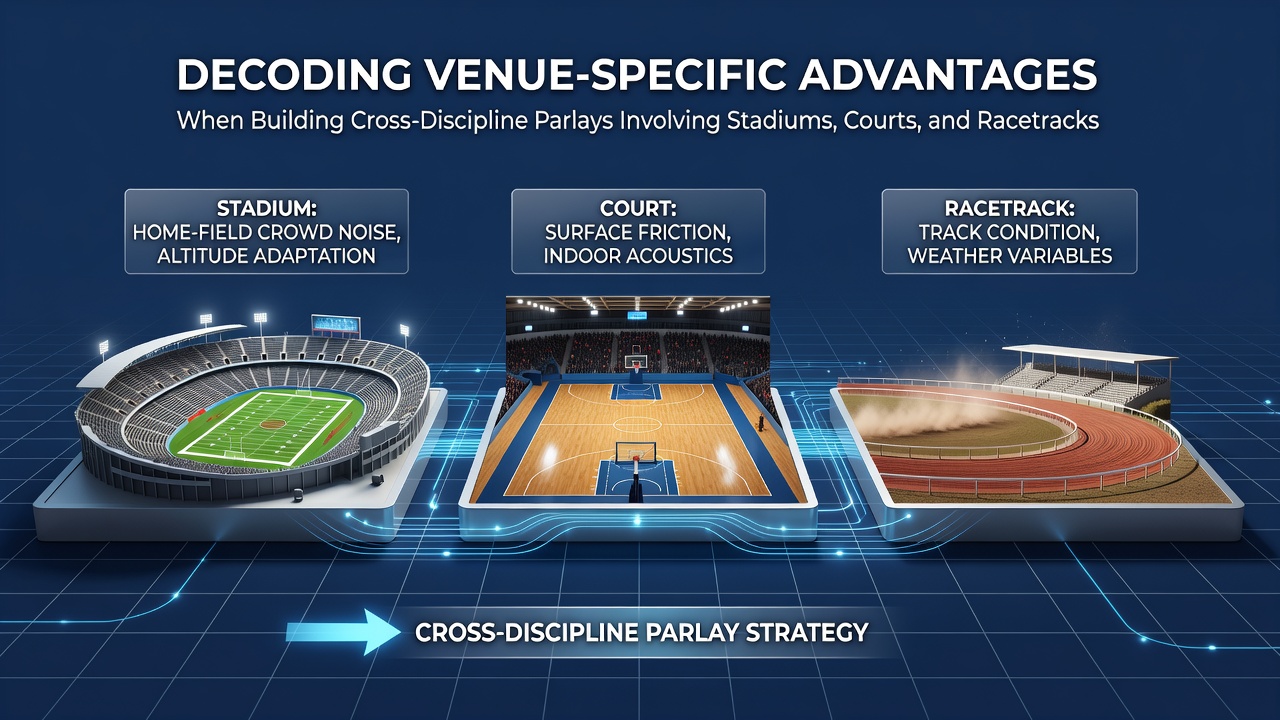
Venue characteristics shape outcomes across different sports, and those who build cross-discipline parlays examine stadium dimensions, court surfaces, and racetrack configurations to identify patterns that appear in combined wagers. Research from the Australian Institute of Sport shows how pitch length, court speed, and track camber correlate with measurable performance shifts when events occur at the same locations repeatedly.
Stadium Layouts and Their Influence on Football Selections
Stadiums vary in pitch size, goalpost placement, and crowd proximity, which affects passing accuracy and set-piece conversion rates. Data collected from European league matches indicates that narrower pitches reduce through-ball success while wider surfaces increase crossing volume. Those constructing parlays that include football legs review historical results from specific grounds because teams that adapt quickly to these dimensions post higher scoring margins over multiple seasons.
Court Surfaces and Tennis Performance Metrics
Tennis courts differ in bounce height and speed, and these factors alter serve percentages and rally lengths. Hard courts produce faster ball travel while clay surfaces slow play and reward defensive positioning. Observers who track Grand Slam data note that players with strong baseline games record higher win rates on slower courts, whereas serve-dominant athletes maintain advantages on faster surfaces. When linking tennis legs to other sports in accumulators, surface history provides a reference point for expected game counts and set durations.
Racetrack Configurations and Horse Racing Sectional Data
Racetracks feature varying straights, turns, and gradients that influence pace and finishing positions. Left-handed tracks favor horses that handle tight bends, while right-handed circuits reward those with strong finishing kicks. Figures from multiple jurisdictions reveal that certain tracks produce consistent draw biases and pace maps, and analysts incorporate these patterns when selecting horses for multi-leg bets. In July 2026 several major meetings occur on tracks known for pronounced rail advantages, allowing precise sectional comparisons across recent renewals.
Cross-discipline parlays require alignment of these venue factors because a fast court tends to shorten match times while a speed-favoring racetrack can compress race durations. Those who layer selections examine how venue traits interact rather than treating each leg in isolation. One study from the University of Nevada Las Vegas examined combined football and tennis events held in the same week and found that surface speed and pitch width produced measurable correlations in total points and goals scored.

Integrating Venue Data Across Disciplines
Accumulators that span stadiums, courts, and tracks benefit from synchronized timing and environmental conditions. When a football match occurs on a wide pitch and a tennis event takes place on a medium-paced court, the combined duration windows shift accordingly. Researchers who analyzed multi-sport events reported that weather patterns affecting outdoor venues create additional variables, particularly when rain alters both grass court grip and racetrack going descriptions.
Those building such parlays often review historical head-to-head records filtered by venue type. For example, certain football sides post improved results at grounds with short corners, while tennis players with strong returns perform better against opponents on slower surfaces. Racetrack specialists track horses that excel on tracks with long home straights. Combining these filtered datasets allows for more granular leg selection without relying on general form alone.
Practical Application in Accumulator Construction
Practical examples include pairing a football team strong at set pieces on compact pitches with a tennis player favored on indoor hard courts and a horse drawn favorably at a left-handed track. Each selection references venue-specific statistics that have shown consistency over several seasons. Market movements sometimes reflect these same patterns when sharp bettors adjust lines based on location data.
July 2026 features overlapping schedules where major tennis tournaments coincide with prominent horse racing festivals and domestic football campaigns. This overlap creates opportunities for those who align venue edges across disciplines. Data aggregation from multiple sources shows that legs chosen with explicit reference to pitch width, court pace, and track bias produce different distribution outcomes compared with selections based solely on team or player form.
Conclusion
Venue-specific analysis supplies measurable inputs for cross-discipline parlays involving stadiums, courts, and racetracks. Stadium dimensions, court surfaces, and track layouts each carry documented performance correlations that remain consistent when examined over repeated events. Those who incorporate these factors into accumulator construction reference historical datasets from the relevant locations to refine leg selection and timing. The approach remains grounded in observable patterns rather than general trends, and continued data collection from upcoming 2026 fixtures will further clarify how these venue characteristics interact across sports.