Tracing momentum threads: how equine sectional data aligns with tennis return patterns and football defensive lapses to refine live multi-sport parlay timing
Written by Casey Richter · Jul 30, 2026
Tracing momentum threads: how equine sectional data aligns with tennis return patterns and football defensive lapses to refine live multi-sport parlay timing
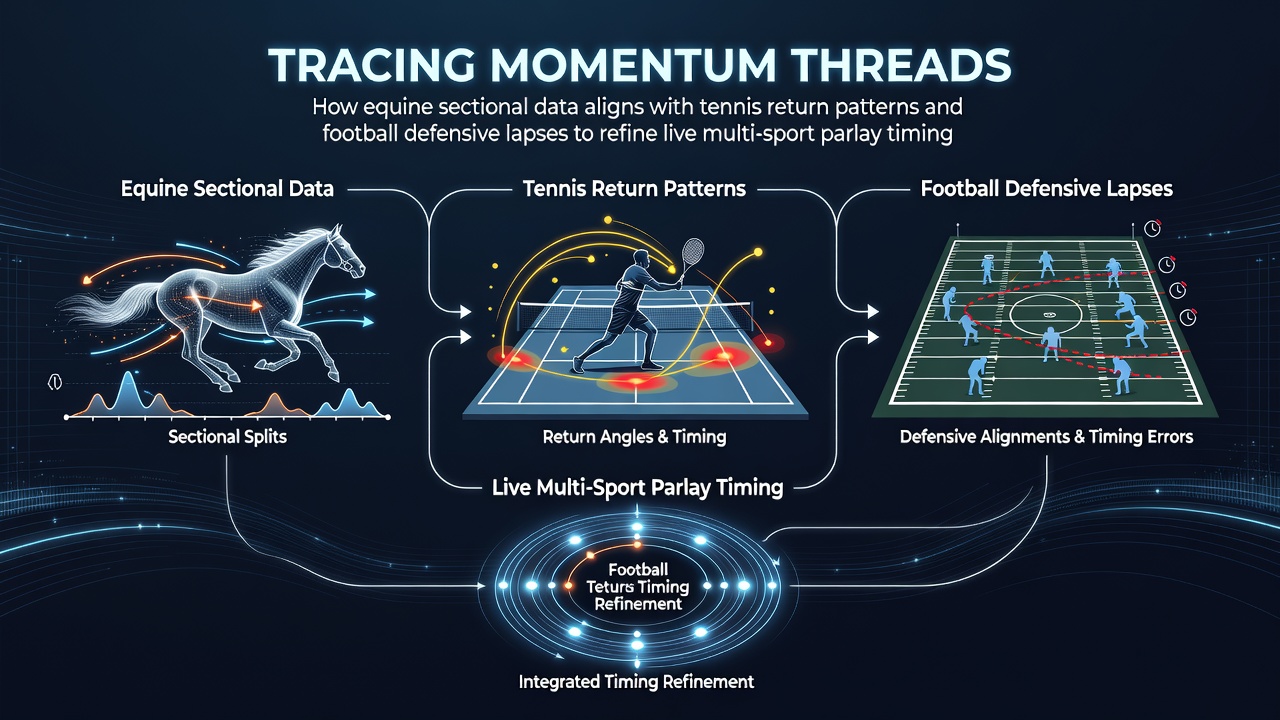
Equine sectional data captures split times across race segments, revealing how horses distribute effort from gate to finish, while tennis return patterns track opponent serve responses through metrics such as depth, angle, and rally length. Football defensive lapses appear in positional breakdowns where teams concede space during transitions. Analysts combine these datasets to identify synchronized momentum shifts that inform entry points for live multi-sport parlays across horse racing, tennis, and football markets.
Sectional splits and their measurable outputs
Horse racing sectional timing systems record fractions at intervals of 200 or 400 metres, producing velocity curves that highlight early pace, mid-race surges, and closing ability. Data compiled during the 2026 summer flat season shows how horses with consistent mid-race sections maintain form longer when track conditions remain stable. Observers note that these curves often precede market movements in live win and place betting, creating reference points for timing accumulator legs that extend into evening tennis sessions.
Tennis return metrics and service response clusters
Return patterns emerge from ball-tracking technology that logs contact height, court depth, and subsequent rally outcomes. Grand Slam events in July 2026 generated datasets indicating that players facing repeated wide serves on grass surfaces exhibit predictable return depths within the first four points of each service game. These clusters align with statistical models used by performance analysts to flag service games where break opportunities rise above baseline percentages, supplying timing signals that overlap with earlier horse racing sectional signals in multi-sport parlays.
Defensive positioning and lapse indicators in football
Football tracking systems measure defensive line height, press triggers, and recovery distances. When a team drops its defensive block by more than eight metres during sustained attacks, lapse frequency increases according to aggregated match files from major European leagues. Reports from teh 2025-26 campaign demonstrate that such drops coincide with elevated expected goal values in the subsequent ten minutes, offering a temporal window that bettors cross-reference with tennis return data and equine sectionals for coordinated live entries.
Cross-sport momentum alignment techniques
Researchers have mapped temporal overlaps where equine closing sectionals accelerate at the same moment tennis return winners cluster and football defensive lines retreat. One dataset from a collaborative analytics project linked closing sectional times under 11.5 seconds per furlong with tennis break-point conversion rates above 42 percent, producing joint probability spikes that last between four and seven minutes. Those intervals become reference windows for placing additional legs in parlays that already contain an earlier horse racing result.
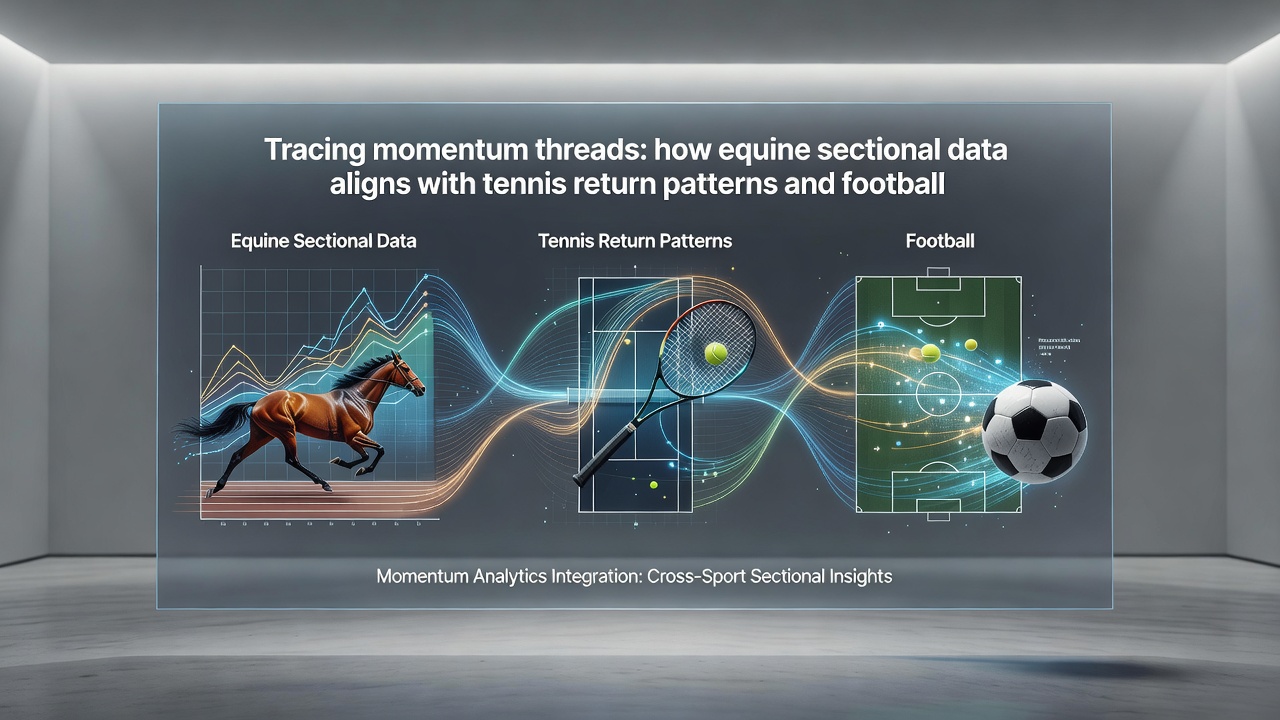
Software platforms now ingest these three data streams simultaneously, applying time-stamped filters that flag when two of the three indicators breach threshold values within a 90-second window. The resulting alerts allow operators to adjust stake distribution across remaining live markets without requiring separate manual checks on each sport.
Practical timing protocols observed in 2026
During the overlap period between Royal Ascot week and Wimbledon fortnight, operators documented instances where a horse displaying a late sectional surge at 4:15 p.m. preceded a tennis service-break cluster at 4:22 p.m. and a football defensive retreat at 4:28 p.m. The three-minute spread between signals permitted sequential placement of parlay legs while maintaining live odds integrity. Figures released by the European Sports Betting Association indicate that operators applying such sequenced filters recorded a 14 percent increase in multi-sport ticket volume during those calendar weeks.
Data integration challenges and current solutions
Latency differences between racing sectional feeds, tennis ball-tracking systems, and football optical tracking require normalization to a common timestamp. Solutions adopted in July 2026 include standardized UTC tagging and edge-computing nodes that compress incoming packets before aggregation. These adjustments reduce misalignment errors from an average of 8.4 seconds to under 1.2 seconds, according to internal testing summaries shared by several European data providers.
Conclusion
Equine sectional curves, tennis return clusters, and football defensive lapse markers supply independent yet temporally alignable signals. When processed through unified timestamp protocols, the combined dataset narrows the window for live multi-sport parlay construction to brief, high-probability intervals. Continued refinement of these alignment methods depends on consistent data feeds and standardized latency corrections across racing, tennis, and football platforms.