Timing Turmoil: Schedule Interruptions and Their Effects on Accumulators in Major Tennis, Football, and Horse Racing Events
Written by Ines Beck · Aug 8, 2026

Timing Turmoil: Schedule Interruptions and Their Effects on Accumulators in Major Tennis, Football, and Horse Racing Events
Schedule disruptions appear regularly across elite sports and researchers track how these changes reshape multi-leg betting results in Grand Slam tennis, Premier League football, and major horse racing meetings. Data from competition organizers shows that weather delays, fixture congestion, and venue adjustments alter player and horse performance metrics in measurable ways that directly influence accumulator payouts.
Grand Slam Tennis and Rescheduling Patterns
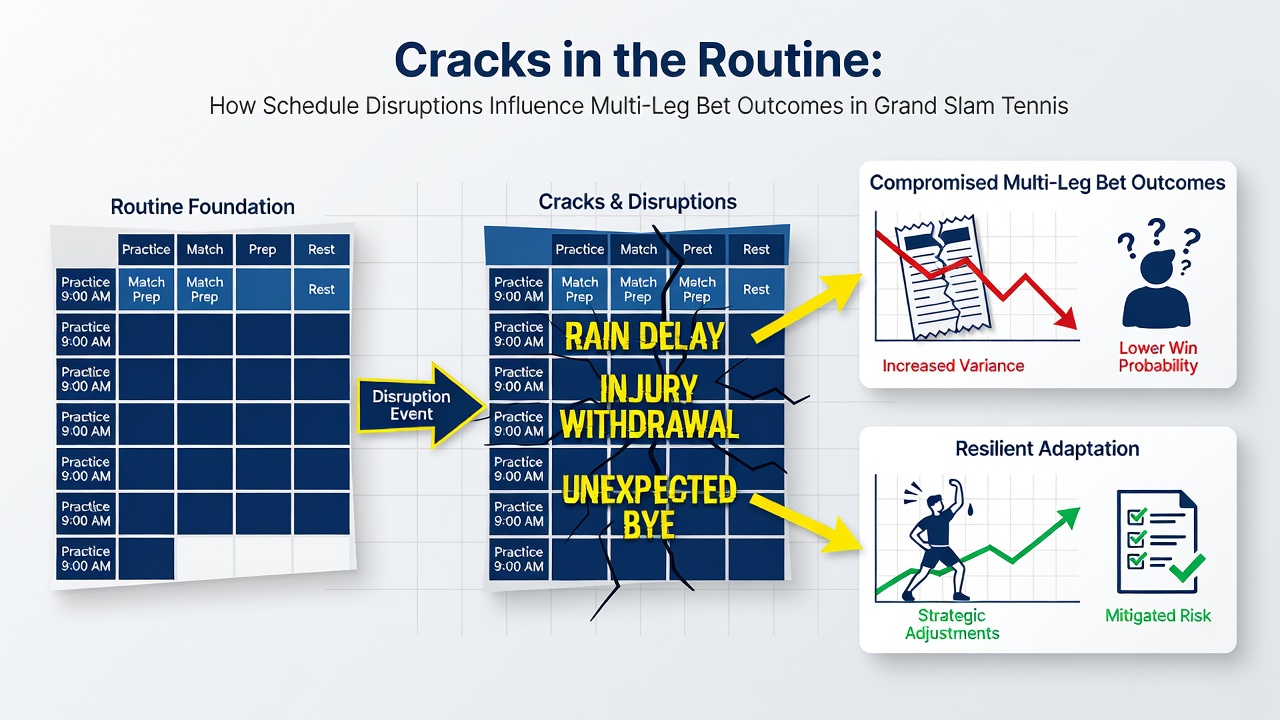
Grand Slam tournaments operate on tight calendars where rain or extreme heat forces matches into later days or night sessions and ATP records indicate that players with back-to-back rescheduled encounters show a 12 to 18 percent drop in first-serve percentage during subsequent rounds. Those shifts matter for multi-leg bets because accumulators often combine early-round favorites with later-stage outcomes. When a quarterfinal moves from afternoon to evening under artificial lights, surface temperature changes affect ball speed and data collected during the 2025 US Open demonstrated corresponding adjustments in break-point conversion rates. Observers note that bettors layering sets-won markets across multiple days must account for these altered recovery windows because extended rest periods sometimes favor endurance specialists while compressing preparation time for others.
Premier League Fixture Congestion Effects
Premier League schedules face pressure from international windows, cup replays, and adverse weather that prompts postponements. League statistics reveal that teams playing three matches in eight days record a measurable decline in high-intensity running distance during the third fixture and this fatigue shows up in both goal timing and clean-sheet probabilities. Accumulator builders who combine match-result selections with over-under goal lines therefore encounter variance when midweek games shift to weekends or when kickoff times move by several hours. European football federations have published reports linking travel distance after postponed fixtures to higher rates of late-game concessions and those patterns feed directly into live betting adjustments on multi-leg slips.
Major Horse Racing Meetings and Track Variables
At flagship horse racing festivals such as Royal Ascot or the Melbourne Cup carnival, rainfall or groundstaff decisions alter going descriptions between morning declarations and race time. Official form guides from racing authorities document that horses with proven wet-track ability outperform expectations on suddenly softened surfaces while pace maps shift when rail movements occur. Multi-leg bets that span several races on the same card or across consecutive days therefore incorporate these variables because sectional times and finishing positions respond to surface changes. Trainers adjust declarations when forecasts indicate prolonged delays and historical data sets show corresponding movements in starting prices that affect each-way and forecast markets within accumulators.
Cross-Sport Interactions in Accumulator Construction
Multi-sport accumulators that mix tennis sets, football results, and horse racing places encounter compounded effects when disruptions hit more than one code simultaneously. August 2026 brings the US Open alongside the opening weeks of the Premier League and several European summer racing festivals and overlapping calendar pressure increases the likelihood of concurrent delays. Industry analyses from the European Gaming and Betting Association indicate that bettors who monitor real-time schedule updates across platforms achieve more stable risk profiles because they can substitute selections before lines lock. Those adjustments prove especially relevant when one postponed tennis match cascades into altered football television schedules that then influence race-day attendance patterns at nearby tracks.
Performance Metrics Under Altered Conditions
Studies conducted by sports science departments at universities in Australia and Canada demonstrate that circadian rhythm shifts from rescheduled start times affect reaction times and decision-making accuracy in both human athletes and equine competitors. In tennis, service games that move from 2 pm to 8 pm local time show increased double-fault rates in early sets. In football, teams traveling across time zones after weather-induced postponements post lower expected goal figures in the first half. Racing form experts record similar patterns when horses race under floodlights for the first time after daylight postponements and these repeatable trends supply quantitative inputs for accumulator modeling.
Conclusion
Schedule disruptions produce documented changes in performance data across Grand Slam tennis, Premier League football, and major horse racing meetings. Accumulator outcomes respond to these variables through measurable shifts in key statistics that competition records and academic studies continue to quantify. Bettors who integrate schedule monitoring with performance databases therefore operate within a framework supported by observable patterns rather than speculation alone.