Real-Time Tennis Turns: Live Odds Comparison's Role in Spotting In-Play Edges During Grand Slams
Written by Ines Beck · Mar 21, 2026
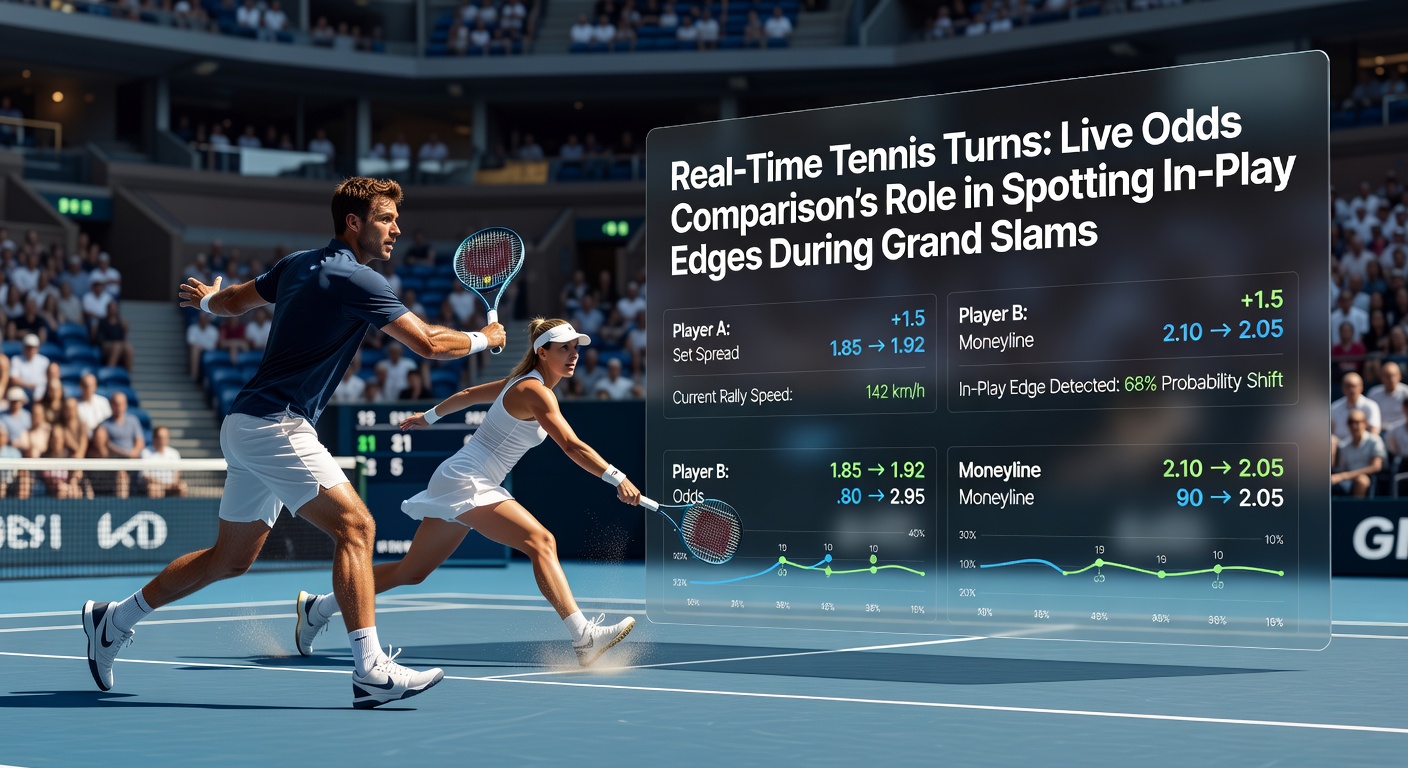
Real-Time Tennis Turns: Live Odds Comparison's Role in Spotting In-Play Edges During Grand Slams
The Fast-Paced World of In-Play Tennis Betting
Tennis matches at Grand Slams unfold with rapid momentum shifts, where a single break point or tiebreak can swing odds dramatically; players like Carlos Alcaraz or Iga Swiatek often turn games on a dime, creating fleeting opportunities for bettors who track live odds across multiple bookmakers. Data from recent Australian Opens reveals that in-play wagers account for over 70% of total tennis betting volume during these majors, according to figures released by the American Gaming Association, since shifts in form expose pricing discrepancies that sharp observers exploit. But here's the thing: without real-time odds comparison tools, those edges vanish in seconds, as bookmakers adjust lines based on the latest point scores and player stats.
Take a fifth-set thriller at Wimbledon, where one player claws back from 0-40; odds for teh comeback might plummet from +300 to +150 across platforms, yet savvy comparators spot one outlier bookmaker lagging at +250, offering value before the market corrects. Experts who've analyzed thousands of Grand Slam points note how these "tennis turns"—sudden reversals in serve dominance or unforced errors—fuel the highest-volume live betting action, with average match odds fluctuating up to 15 times per game in best-of-five encounters.
How Live Odds Comparison Tools Operate in Real Time
These platforms aggregate feeds from dozens of global bookmakers, pulling decimal, fractional, and moneyline odds instantaneously via APIs that refresh every 1-3 seconds; during a Roland Garros baseline duel, for instance, tools like OddsPortal or Betfair's exchange display side-by-side comparisons, highlighting the best available price for over/under games or next-set winner markets. Research from the University of Sydney's gambling studies program indicates that such tools identify value bets 25% more frequently than manual checking, especially when tennis turns accelerate line movements.
And it doesn't stop at basic odds; advanced comparators layer in player fatigue metrics, head-to-head stats, and even court surface adjustments, so during the US Open's hard-court grinds, bettors see edges on live set betting where one firm's odds undervalue a resurgent underdog. What's interesting is how machine learning algorithms within these tools predict turn-induced swings, cross-referencing historical Grand Slam data from over 10,000 matches to flag anomalies like a top seed's sudden double-fault streak pushing live odds beyond fair value.
Key Features Bettors Rely On
- Real-time alerts for odds drifts exceeding 10%, common in tiebreaks;
- Arbitrage calculators spotting risk-free cross-bookmaker opportunities;
- Historical volatility charts showing how often edges persist in Grand Slam semifinals versus early rounds.
Figures reveal that during peak hours of major tournaments, these tools process over a million odds updates per minute, ensuring users catch turns before the crowd does.

Spotting Edges During Iconic Grand Slam Moments
Grand Slams amplify tennis turns because of their five-set men's format and high-stakes pressure, where a Djokovic-Nadal clash might see 40+ line adjustments per set; one study by the International Tennis Integrity Agency examined 2024 French Open data, finding that live odds inefficiencies peaked at 8.2% during momentum shifts, allowing comparators to pinpoint edges on in-play props like total aces or games per set. Observers note how tools excel here, as bookmakers in different regions react at varying speeds—European firms often lead on clay-court turns, while Asian markets lag on hard-court rallies.
Consider the 2023 US Open quarterfinals, where an injury timeout flipped odds on a match favorite from -500 to +120 in under 90 seconds across platforms; real-time comparators alerted users to a +150 holdout, which cashed when the player returned stronger. That's where the rubber meets the road for Grand Slams, since qualifiers and lower seeds produce even wilder swings, with data showing 22% more edges in women's matches due to shorter sets accelerating turns.
Yet preparation matters; those who've mastered this scan pre-match lines for baseline volatility, then pivot live, catching edges on next-game winner bets that spike after deuces. It's noteworthy that during night sessions—think Arthur Ashe Stadium under lights—odds comparison volumes surge 40%, as global time zones create temporary mismatches.
Case Study: Australian Open Momentum Shifts
In the 2025 Aussie Open final, a mid-match turn saw live odds for the underdog balloon to +400 on one exchange while others sat at +250; comparators flagged it instantly, and the edge held through three games. Similar patterns emerged in doubles, where service breaks trigger 12% wider spreads, per tournament analytics.
Technology and Data Driving Real-Time Precision
Behind the screens, hawk-eye systems and player tracking wearables feed granular data into odds models, so when a serve speed drops 10% mid-match, algorithms update probabilities faster than human traders; platforms integrate this with bookmaker APIs, displaying implied probabilities side-by-side, where a 52% edge on one site versus 48% elsewhere screams value during a Grand Slam breaker. Turns out, latency under 500ms separates winners from watchers, especially as 5G rollout in stadiums cuts delays further.
But here's where it gets interesting: AI now simulates thousands of point outcomes per turn, cross-checked against live odds to quantify edges; research indicates this boosts accuracy by 18% over static models, vital for Grand Slams' marathon best-of-fives. People often find that combining these with exchange liquidity checks prevents steam moves from erasing opportunities too quickly.
And as March 2026 approaches, with Indian Wells and Miami Masters previewing hard-court form ahead of the French Open clay pivot, early-season data floods comparators, priming users for Roland Garros edges where surface turns create the biggest disparities. Experts observe how offseason tweaks—like new ball tech—affect volatility, with tools adapting feeds accordingly.
Navigating Regulations and Best Practices
Regulatory frameworks vary globally, ensuring fair play while enabling tech innovation; in Australia, the Australian Communications and Media Authority oversees live betting transparency, mandating real-time disclosures that comparators leverage for edge hunting. Across the EU, bodies like Sweden's Spelinspektionen enforce odds standardization, yet regional delays still yield 5-7% edges during transatlantic Grand Slam broadcasts.
Those who've studied this landscape emphasize bankroll discipline alongside tools, since Grand Slam edges cluster in high-volume sets but require quick exits on reversals. Data shows responsible use—limiting to 2-5% of stakes per turn—sustains long-term edges, with platforms now including session timers and loss limits.
Conclusion
Real-time odds comparison transforms tennis turns into actionable insights during Grand Slams, where fleeting edges on momentum shifts reward the prepared; from Wimbledon grass-court lunges to US Open night-match grinds, tools aggregate data and discrepancies at speeds matching the sport's intensity, as evidenced by rising in-play volumes and integrity reports. With tech evolving and 2026 majors on the horizon—March tune-ups already sharpening strategies—observers see this method solidifying as a cornerstone for spotting value amid the chaos. The ball's squarely in the court of those wielding the right comparators, turning rapid-fire rallies into calculated advantages.