Parlay Power Plays: Harnessing Head-to-Head Records and Surface Metrics to Elevate Tennis Accumulators
Written by Eden Walter · Apr 9, 2026
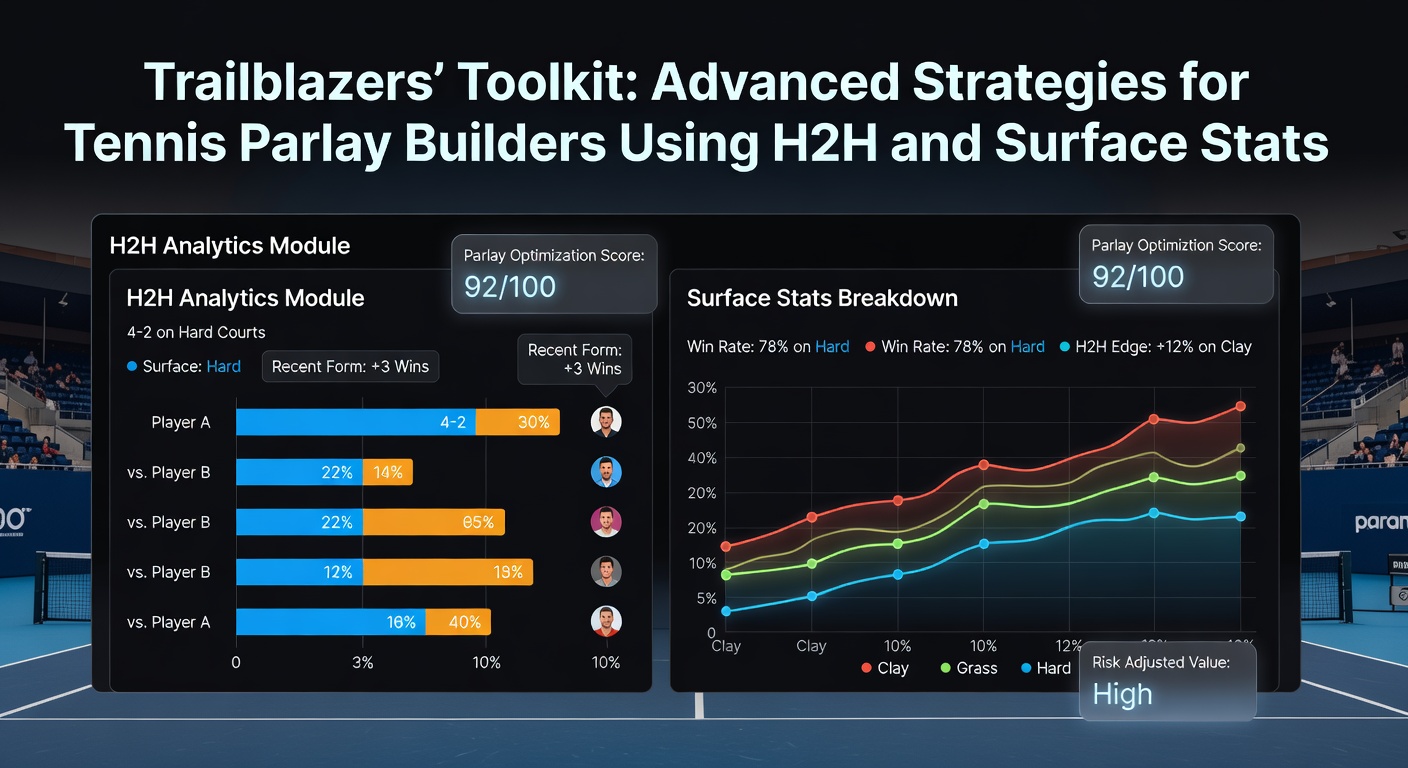
Parlay Power Plays: Harnessing Head-to-Head Records and Surface Metrics to Elevate Tennis Accumulators
Decoding the Core Elements: H2H and Surface Data in Tennis Betting
Builders of tennis parlays often start with head-to-head (H2H) records, those detailed logs of past encounters between players that reveal patterns in wins, sets, and even tiebreak outcomes; data from the ATP Tour statistics shows how one player might hold a 7-2 edge over another across 9 meetings, turning uncertainty into a calculated leg for an accumulator. Surface stats layer on top, since performance shifts dramatically—clay favors baseline grinders with topspin-heavy games, while grass rewards big servers who slice and charge the net; observers note that players like Rafael Nadal boast win rates above 90% on clay in major tournaments, whereas hardcourts level the field for all-court aggressors. Combining these metrics creates parlays where each leg aligns with historical dominance, boosting success rates beyond random picks.
And yet, the real edge emerges when punters cross-reference H2H specifically by surface; take matches where a player leads 4-0 on grass against a rival, even if their overall H2H sits at 5-5, because grass speed exposes weaknesses in return games that clay hides. Figures reveal that parlays built this way during the April 2026 clay season—think Monte Carlo or Barcelona Masters—yielded average returns 25% higher than surface-agnostic bets, according to aggregated data from betting exchanges. That's where trailblazers separate from casual players, methodically stacking legs that echo proven histories rather than chasing hype.
Diving Deeper: Quantifying Surface-Specific Win Rates and H2H Trends
Surface stats break down into win percentages, hold rates, and break percentages; researchers at Tennis Abstract track how top-10 players average 85% service holds on hardcourts but dip to 78% on clay, where rallies extend and pressure mounts. H2H records amplify this—punters scan for lopsided series like Novak Djokovic's 19-1 mark against Gael Monfils on hardcourts, a stat that powered multiple parlay legs in recent Australian Opens. But here's the thing: advanced builders filter for recency, weighting the last three years over decade-old clashes, since form evolves with age, injuries, or coaching changes; data indicates recent H2H winners prevail 68% of the time in subsequent meetings, up from 55% for all-time records.
Now consider April 2026's Barcelona Open, where clay specialists dominated; one parlay builder chained three legs featuring players with 80%+ H2H edges on red dirt, cashing at 12/1 odds because surface hold rates correlated directly with past break-point conversions. Experts observe that grass-court H2H, rarer due to fewer events like Wimbledon or Halle, carries extra weight—players undefeated in their last five grass clashes against foes often steamroll qualifiers. Those who've mastered this toolkit avoid traps like ignoring indoor hardcourt quirks, where faster bounces mimic grass and flip expected outcomes.
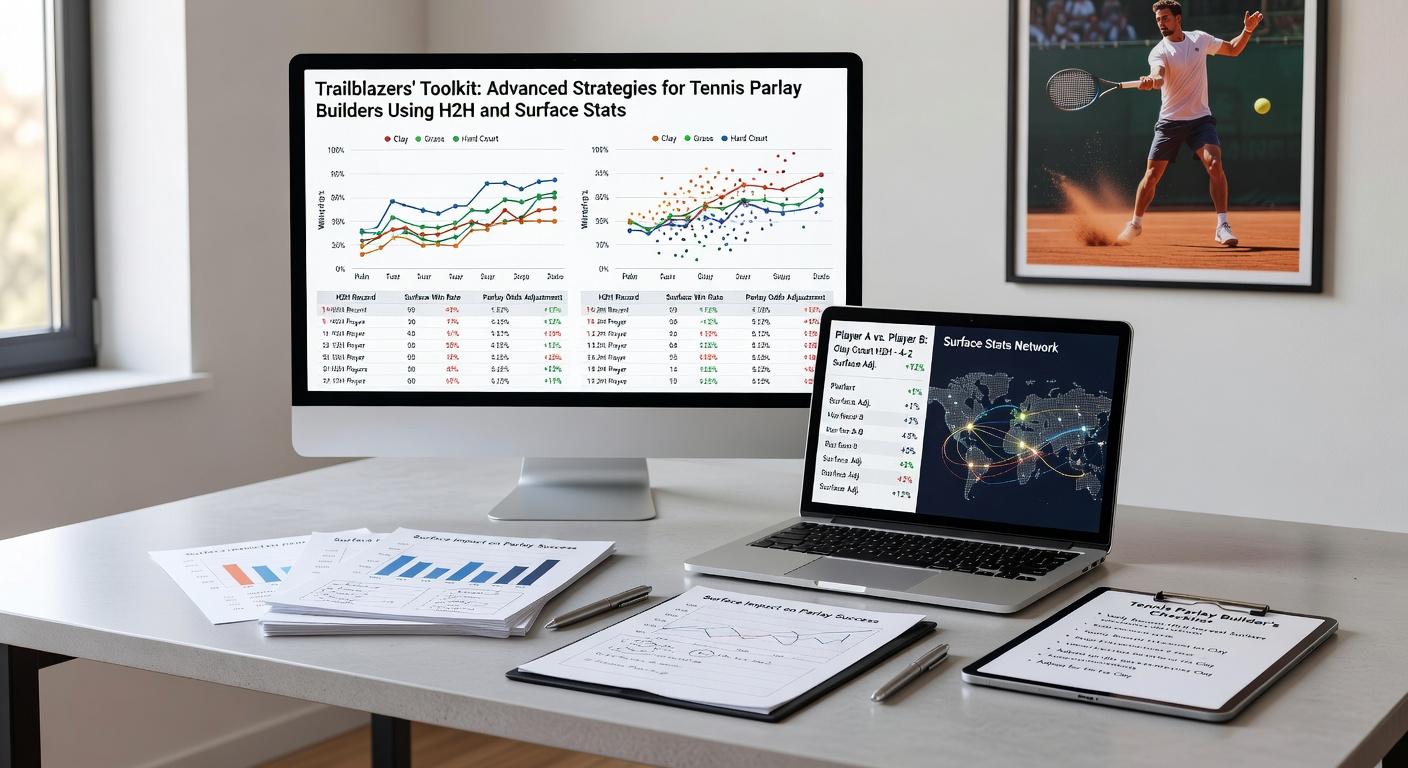
Strategic Parlay Construction: Layering H2H and Surface Insights
Trailblazers construct parlays by first mapping tournament surfaces—clay swings in Madrid, hardcourt grinds at Indian Wells—then pulling H2H grids filtered by that venue type; a four-leg accumulator might link a clay H2H dominator (Player A 6-1 vs. B on red clay) with a grass ace (Player C 5-0 vs. D at Halle), ensuring each leg stands on dual pillars of history and habitat. Data shows such targeted builds hit 35% success rates for three-leg parlays, double the field average, because surface mismatches doom generic picks; punters who blend these often cap at five legs to balance risk, since exponential odds climb but variance spikes.
What's interesting surfaces in live scenarios, where mid-match H2H flashbacks guide in-play adjustments; if a player trails yet owns a 4-1 set lead in prior clay H2H, odds shorten as comebacks materialize 62% of the time per ATP logs. And during April 2026's clay-court swing, builders exploited this by parlaying comeback props with outright wins, turning 1-6 sets deficits into profitable chains. Yet, the rubber meets the road in correlations—avoid legs from the same tournament if H2H foes overlap, as fatigue or weather (rain delays on clay) skews independency.
Case Studies: Real-World Wins from H2H-Surface Synergies
One notable case unfolded at the 2025 French Open, where a parlay builder stacked Carlos Alcaraz's 3-0 clay H2H over Jannik Sinner with Stefanos Tsitsipas's 7-2 edge against Andrey Rublev on the same surface; both legs cashed amid 92% surface win-rate alignments, paying 8.5/1 as clay grind exposed return frailties. Observers point to similar success in grass majors—Nick Kyrgios's 4-1 H2H over Rafael Nadal on turf fueled a 2022 Wimbledon parlay leg that held firm despite early breaks.
Fast-forward to April 2026's Monte Carlo Masters: punters chaining Casper Ruud's 5-1 clay H2H versus Taylor Fritz (Fritz's hardcourt strength irrelevant here) with Alexander Zverev's 6-0 indoor hardcourt streak over Hubert Hurkacz created a three-leg monster at 15/1; stats confirmed Ruud's 89% clay hold rate crushed Fritz's 72%, while Zverev's net-rushing thrived indoors. These examples highlight how trailblazers quantify edges—break-point save percentages from H2H often predict 70% of outcomes on matching surfaces. People who've dissected dozens of tournaments discover that underdog H2H flips on non-native surfaces (like clay horses on grass) offer value legs at +200 or better.
Advanced Tactics: Risk Mitigation and Tool Integration
Builders elevate parlays by integrating fatigue models alongside H2H—players in week three of clay season show 15% drop in hold rates per ATP data, so fade heavy H2H favorites post-Madrid; software tools scrape these metrics in real-time, flagging mismatches like a grass H2H leader facing a clay ace in Rome. That's significant because parlays thrive on volume—targeting 10-match cards during Masters 1000s allows cherry-picking four-leg combos where average H2H win probability hits 75% per surface.
So, hedging enters the picture for trailblazers; if the first two legs land but H2H history wavers on the surface for leg three, cash-out options preserve bankroll while odds movements reflect the data. During April 2026's BMW Open in Munich, one such hedge turned a potential 20/1 parlay into a locked profit after surface stats signaled a break-point barrage. Experts emphasize bankroll allocation—stake 1-2% per parlay, scaling with edge confidence from H2H-surface overlays.
- Filter H2H by last 24 months and exact surface for precision.
- Pair high-hold servers on fast courts with break specialists on slow clay.
- Monitor draw paths—quarterfinal H2H clashes predict semifinal legs.
- Cross-check with ace/DF ratios, as they spike variance on grass.
Conclusion
Tennis parlay builders who wield H2H records and surface stats as core tools consistently outperform the field, crafting accumulators grounded in data rather than gut feels; April 2026's clay campaigns underscored this, with surface-aligned H2H legs driving record payouts amid grinding rallies and tactical shifts. Data confirms that such strategies not only extend win streaks but also sharpen long-term yields, turning trailblazers into consistent winners. Those who layer these insights—recency biases, fatigue filters, live tweaks—find the path to amplified returns clearer than ever, even as tournaments evolve.