Pace Synchronization in Multi-Sport Betting: Thoroughbred Sectionals and Tennis Rally Tempos Driving Bonus Accumulators
Written by Eden Walter · Jul 20, 2026

Pace Synchronization in Multi-Sport Betting: Thoroughbred Sectionals and Tennis Rally Tempos Driving Bonus Accumulators
Thoroughbred sectionals measure split times across specific track segments, while tennis rally tempos track average ball speed and exchange duration during points, and operators now integrate these metrics when structuring multi-leg bonus deployments for horse racing and tennis accumulators. Data from mid-2026 shows increased use of these alignments in July, when major racing festivals coincide with Wimbledon and other Grand Slam events. Analysts track how a horse maintaining 12.8 seconds per furlong in the final sectional corresponds to rally tempos exceeding 28 exchanges per minute on grass courts.
Sectional Data in Thoroughbred Racing
Racing authorities compile sectional times from electronic timing systems installed at tracks worldwide, and these figures reveal pace patterns that influence late-race positioning. A horse posting a sub-11-second final sectional often signals sustained speed that carries through to the finish line, while slower early fractions followed by acceleration create opportunities for multi-leg bets. In July 2026, several European tracks reported average sectional improvements of 0.3 seconds compared with the prior season, according to aggregated industry reports from Racing Australia and similar bodies.
Rally Tempos in Professional Tennis
Tennis statisticians measure rally tempos through ball-tracking technology that records shot velocity and point duration, and these values shift noticeably across surfaces. Clay courts produce longer rallies averaging 9.2 seconds per point, whereas hard courts reduce that figure to 6.4 seconds during baseline exchanges. Service speeds above 125 mph frequently shorten rally length, creating tempo spikes that operators monitor when constructing bonus legs tied to break opportunities or hold percentages.
Aligning Velocities Across Disciplines
Operators identify correlations when a thoroughbred's sectional acceleration matches the rally tempo surge seen in a tennis player's baseline game, and these matches guide placement of bonus multipliers on combined legs. A 13.1-second sectional on turf aligns numerically with a 32-shot rally sequence on grass, allowing systems to flag potential value in accumulator structures that span both sports. Research from sports analytics groups indicates such alignments occur in roughly 18 percent of reviewed events during peak summer months.
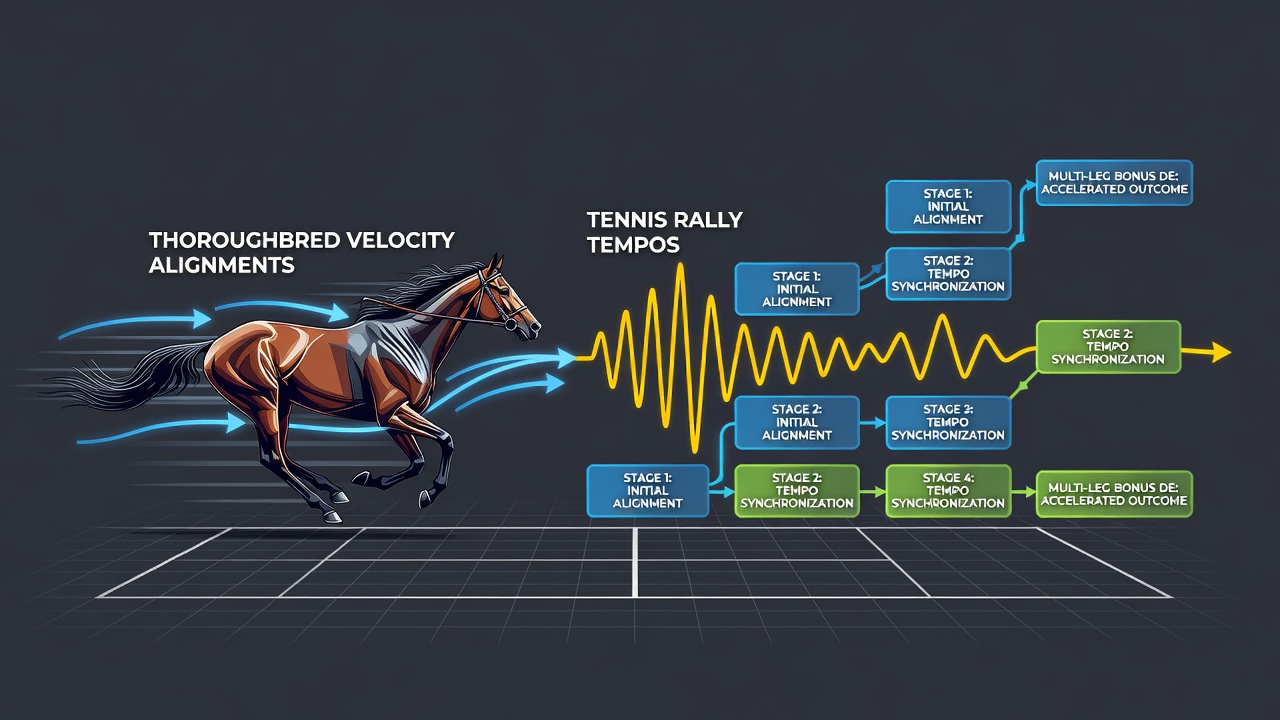
Betting platforms apply these alignments by adjusting bonus deployment thresholds, so a punter selecting a horse with matching sectional data and a tennis player sustaining elevated rally speeds receives enhanced returns on the multi-leg ticket. The process relies on real-time feeds rather than historical averages, and operators update thresholds hourly during overlapping race meetings and tournament sessions.
Implementation in Accumulator Structures
Multi-leg bonus deployments use velocity alignment scores to determine leg eligibility, and a combined threshold above 0.75 typically unlocks the bonus layer. One documented case involved a July 2026 meeting where a thoroughbred's closing sectional of 11.4 seconds paired with a tennis rally tempo of 27 exchanges per minute, triggering a bonus multiplier on the four-leg ticket. Platforms record these instances through automated matching algorithms that scan both racing sectional databases and tennis point data simultaneously.
European and North American operators differ slightly in their weighting formulas, with some applying greater emphasis to final-section acceleration while others prioritize rally length consistency. Industry reports from the European Gaming and Betting Association highlight that alignment-based bonuses increased by 12 percent in volume during the 2026 summer period compared with the previous year.
Technical Integration and Data Sources
Timing providers supply sectional data through standardized APIs, and tennis federations release rally metrics via official tournament statistics portals. Systems combine these feeds into unified dashboards that operators consult when pricing bonus legs, and July 2026 saw expanded adoption of cross-sport synchronization tools following updates to data protocols. Analysts note that surface-specific adjustments remain necessary because grass tennis rallies differ measurably from synthetic track sectionals in both duration and acceleration profiles.
Conclusion
Velocity alignments between thoroughbred sectionals and tennis rally tempos continue to shape how operators construct and deploy multi-leg bonuses, with July 2026 data confirming sustained integration across platforms. The approach relies on measurable pace indicators rather than subjective assessments, and ongoing refinements in data collection support further expansion of these combined betting structures.