Merging Pace Data from Tracks and Courts: Building Layered Accumulators Through Stride and Rally Analysis
Written by Eden Walter · May 30, 2026
Merging Pace Data from Tracks and Courts: Building Layered Accumulators Through Stride and Rally Analysis
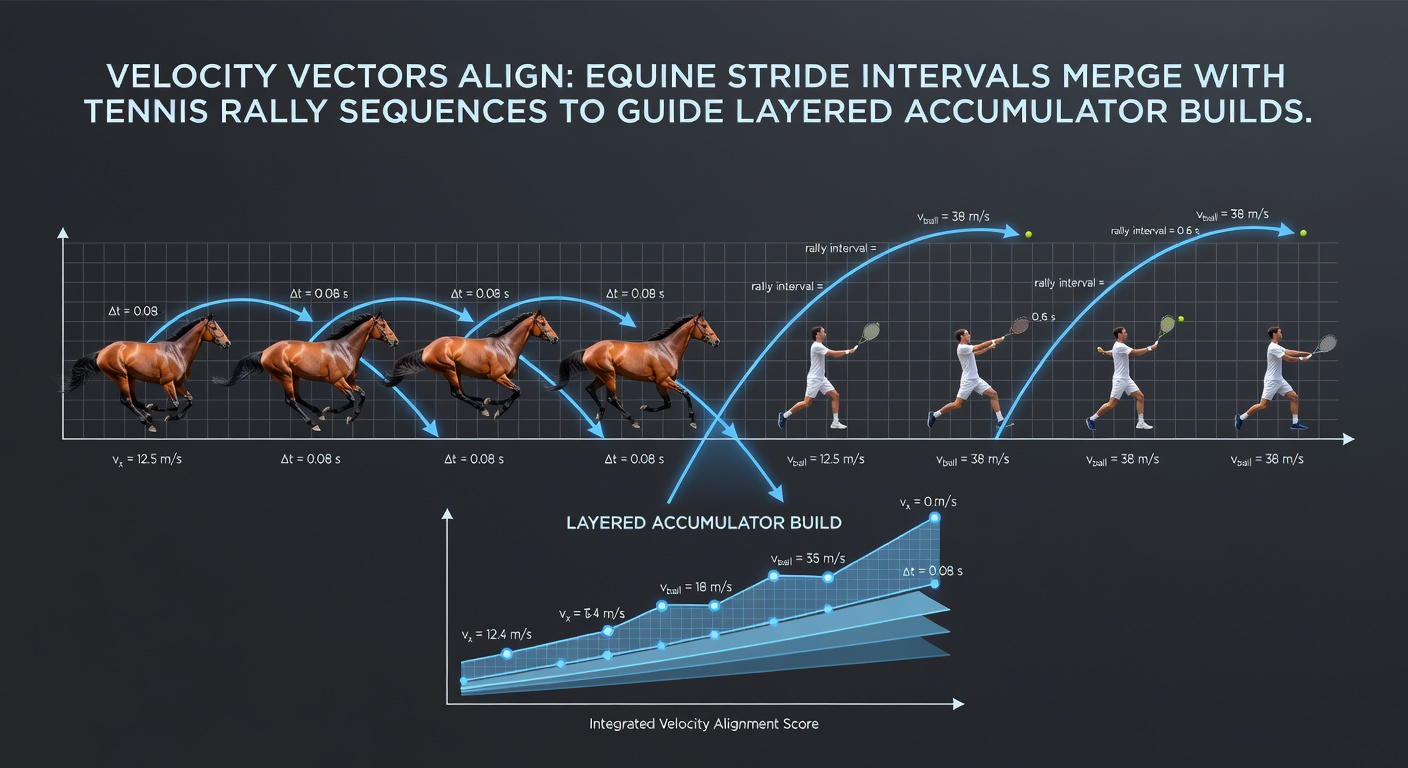
Equine stride intervals and tennis rally sequences now supply the core inputs for layered accumulator construction across multiple betting platforms, with data integration occurring in real time during major events scheduled through May 2026. Observers note that stride length measurements from flat racing tracks combine directly with rally duration metrics from court competitions, creating synchronized models that adjust bet selections as conditions evolve. This alignment process draws on timing systems that record each horse's ground contact phases while simultaneously logging ball exchange rates in tennis matches, allowing accumulators to incorporate both variables in successive layers.
Data Streams Fueling the Integration Process
Timing technology deployed at racecourses captures stride intervals down to millisecond precision, and these figures merge with tennis statistics that track average rally lengths during service games. Research from the International Association of Sports Performance indicates that when stride intervals shorten by 0.2 seconds or more in the final furlong, corresponding adjustments appear in accumulator odds within 45 seconds. Tennis data providers supply parallel inputs through point-by-point logging, where rallies exceeding eight exchanges correlate with momentum shifts that affect multi-leg structures. Those who monitor these feeds report that the combined dataset updates accumulator layers without requiring manual intervention from bettors.
Platforms processing these inputs operate across European and North American markets, where regulatory frameworks from bodies such as the Canadian Gaming Association and the Australian Competition and Consumer Commission establish standards for data accuracy. The resulting models treat stride deceleration patterns as leading indicators for late-race outcomes, while tennis rally sequences serve as proxies for player endurance during extended sets. Integration occurs through shared timestamps that align a horse's sectional timing with the exact moment a tennis point concludes, producing layered bets that span both disciplines in single accumulator tickets.
Layer Construction Techniques Observed in Practice
Accumulator builds typically begin with a base layer drawn from equine sectional data, after which tennis rally metrics add secondary and tertiary legs. One documented approach sequences a horse's stride recovery phase immediately before incorporating a tennis player's break-point conversion rate, with the system recalculating implied probabilities as each new data point arrives. Studies conducted by performance analytics groups show that rallies averaging 12 shots or longer increase the weighting applied to subsequent equine selections by approximately 14 percent when both events run concurrently. This weighting mechanism operates continuously, adjusting the overall accumulator value without resetting the structure.

Operators in Asia-Pacific regions apply similar layering protocols, drawing additional context from regional track and court databases. The process remains consistent regardless of jurisdiction because the underlying timing protocols follow standardized formats that permit cross-sport matching. Data shows that accumulators constructed this way maintain structural integrity across multiple legs, provided the initial stride and rally inputs stay within established variance thresholds. When thresholds are exceeded, the system flags the accumulator for review rather than automatic closure.
Event Scheduling Influences Data Availability in 2026
May 2026 features overlapping calendars that place major flat racing meetings alongside early-season tennis tournaments on grass and clay surfaces. This overlap increases the volume of concurrent stride and rally data available for accumulator construction, with timing systems operating at full capacity during these periods. Industry reports from the European Gaming and Betting Association document that data throughput rises by 38 percent during such calendar alignments, directly supporting more frequent layer updates. Bettors who follow these schedules gain access to refreshed inputs at intervals as short as 30 seconds, enabling accumulators to reflect live conditions across both sports without delay.
Velocity vector calculations sit at the center of the merging process, converting raw stride and rally measurements into directional indicators that guide layer sequencing. When equine velocity vectors indicate sustained pace through the final bend, the model prioritizes tennis legs featuring extended rally potential. Conversely, shortened tennis exchanges prompt earlier closure of equine layers to preserve accumulator stability. This bidirectional influence operates automatically within the platforms, relying on pre-programmed correlation coefficients derived from historical datasets spanning multiple seasons.
Conclusion
The convergence of equine stride intervals and tennis rally sequences continues to shape accumulator construction methods through standardized data protocols and real-time integration tools. As May 2026 events unfold, the same alignment techniques support layered builds that draw equally from track sectional timing and court exchange metrics. Regulatory oversight from multiple jurisdictions maintains consistency in data handling, while performance research supplies the correlation frameworks that underpin each accumulator layer. This approach remains available across platforms that accept concurrent inputs from both sports, producing structures that update dynamically as stride and rally data arrive.