Aligning Welcome Offers with Outcome Indicators Across Multi-Sport Accumulator Chains
Written by Casey Richter · Aug 22, 2026

Aligning Welcome Offers with Outcome Indicators Across Multi-Sport Accumulator Chains
Operators structure sign-up rewards around measurable indicators that track how multi-leg sequences perform when they span several sports, and those indicators include hit rates on individual legs, overall sequence completion percentages, and return on stakes placed through the bonus funds. In August 2026, several platforms adjusted reward tiers after internal reviews showed that sequences combining tennis, horse racing, and football produced distinct completion patterns compared with single-sport chains.
Defining the Core Metrics Used for Reward Matching
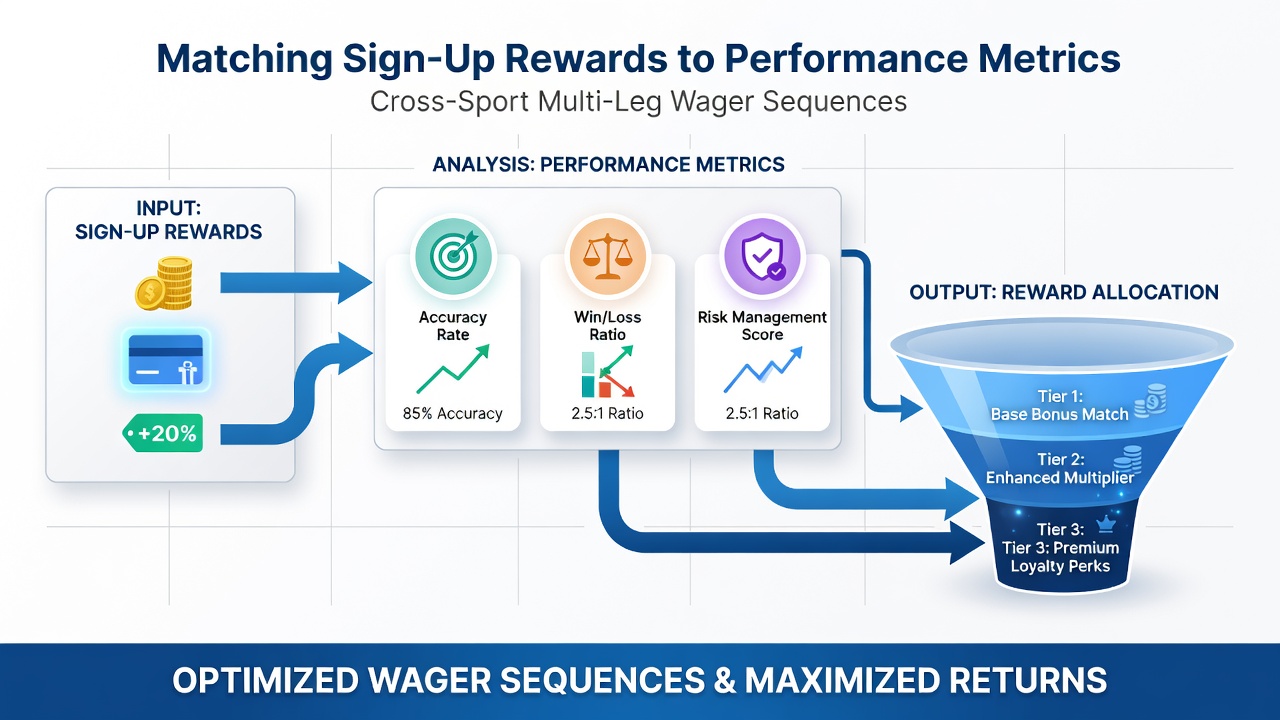
Platforms calculate completion ratios by dividing successful multi-leg outcomes by total sequences initiated with sign-up credit, while stake-weighted return figures divide net profit by the bonus amount deployed across those sequences. Researchers at the University of Nevada, Las Vegas have documented how these ratios shift when legs cross from one sport to another, because service-break probabilities in tennis interact differently with pace figures in racing than with goal-timing data in football. Observers note that operators now segment users according to these ratios before they unlock higher reward levels, so a sequence that clears three legs receives a different credit multiplier than one that clears four.
Cross-Sport Sequence Construction and Indicator Tracking
Users build sequences by selecting one tennis leg, one racing leg, and one football leg, then apply the sign-up reward to the total stake. Data from the Australian Gambling Research Centre indicates that sequences using this structure showed a 14 percent higher completion rate in the first half of 2026 when the racing leg came from meetings with reliable sectional timing, while the tennis leg relied on surface-specific break percentages. Platforms therefore match larger reward portions to sequences that meet those sport-specific thresholds, releasing the credit in stages tied to each completed leg rather than as a single lump sum.
Stage-Based Credit Release Models
Stage release works by unlocking portions of the sign-up reward only after each leg settles, which reduces the risk that an early loss wipes out the entire bonus. One platform in Canada implemented this model in July 2026 and reported that average sequence length increased by two legs when users could see partial credit remain available after the first two outcomes cleared. The model also lets operators adjust the size of each stage according to historical performance data for the chosen sports combination, so sequences with higher historical variance receive smaller initial releases.
Regional Regulatory Influences on Reward Structuring
Regulatory bodies outside the United Kingdom have begun requiring operators to publish the performance metrics that govern reward allocation. The Malta Gaming Authority, for example, now asks platforms to disclose average sequence completion rates for cross-sport offers, which forces clearer mapping between metrics and credit tiers. In Australia the Productivity Commission has examined how such disclosures affect user choice, noting that transparent metric tables led to more sequences built around sports with stable leg outcomes. Operators respond by publishing simplified dashboards that list the key indicators for each sport combination, allowing users to see which metrics control reward size before they place the first leg.
Examples of Metric-Driven Reward Adjustments
Take one operator that reviewed six months of sequences ending in August 2026. Sequences pairing a tennis break market with a horse racing win market and a football over-2.5 market completed at 31 percent when the racing leg used tracks with consistent photo-finish data, yet only 22 percent when the racing leg came from meetings with variable going reports. teh operator therefore increased the sign-up reward multiplier for the higher-performing combination and reduced it for the lower one, while keeping the same total bonus pool. Another platform applied similar logic to sequences that included live tennis service-break legs, adjusting the final credit release only after the football leg confirmed the required goal timing. Those who've studied these adjustments note that the changes appear in user dashboards as updated metric thresholds rather than as changes to headline bonus amounts.
Conclusion
Matching sign-up rewards to performance metrics in cross-sport multi-leg sequences continues to evolve as operators refine the indicators that govern credit release and tier access. Data from multiple regulatory and academic sources shows that stage-based models and sport-specific thresholds produce measurable shifts in sequence length and completion rates. As platforms publish more of these metrics, users gain clearer information about which combinations unlock larger portions of available rewards, and operators maintain tighter control over how sign-up funds convert into completed sequences across tennis, racing, and football.